
Why AI Analysis Matters More as Beauty Assortments Grow

What Olive Young Dunchon Park Foreon Skin Scan Tells Us About the Future of AI Beauty Retail

The challenge facing beauty shoppers today is no longer a lack of choice.
It is almost the opposite.
Moisture, soothing care, skin barrier, pores, firmness, pigmentation, sensitivity, dermocosmetics—the number of concerns and product categories continues to grow. Within each category, customers face dozens of brands, ingredients, formats, and price points.
More information is available than ever before, yet one question remains surprisingly difficult to answer in store:
“What does my skin actually need right now?”
This is where AI skin analysis begins to make sense in beauty retail.
Instead of starting with a product, customers can start by understanding their own skin and use that information as a reference for exploring relevant products and services.
The ChoiceDx-powered Skin Scan at Olive Young Dunchon Park Foreon offers a practical example of how this shift is taking shape in a real retail environment.


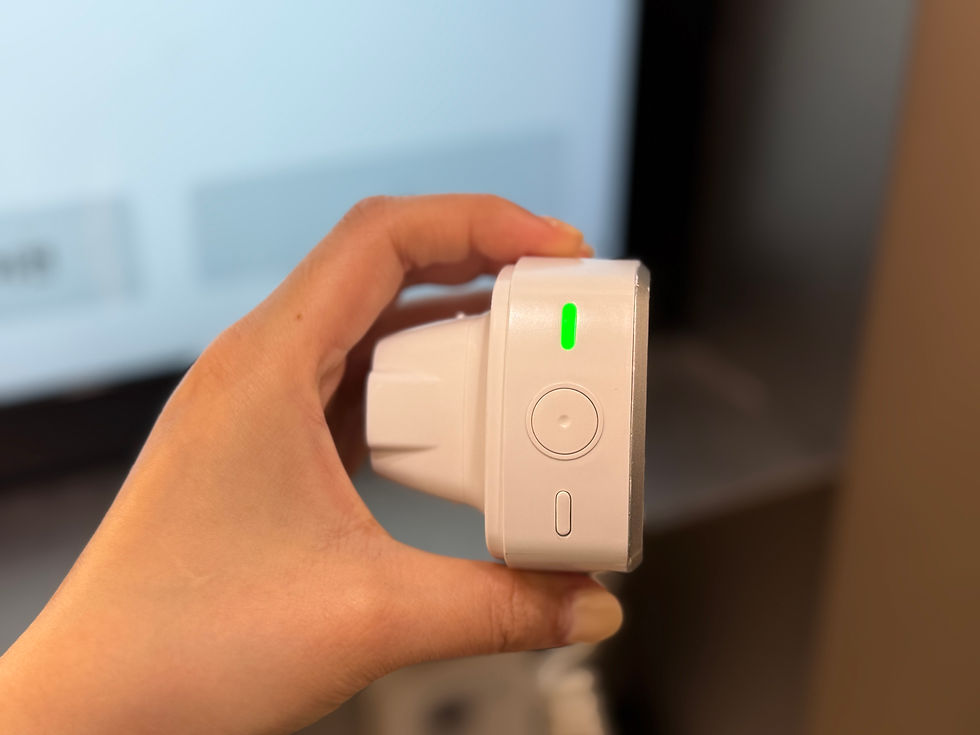
AI Skin Analysis Is Less About Recommendation and More About Creating a Starting Point
The traditional cosmetics shopping journey usually begins with products.
Store visit → Brand discovery → Bestsellers → Reviews → Product comparison → Purchase
AI skin analysis can change the starting point.
Store visit → Skin analysis → Identify areas of interest → Explore relevant categories → Compare or consult → Purchase
The difference may look small, but it is meaningful from a retail perspective.
In the traditional journey, customers must navigate a large assortment on their own. Once they have a personal reference point, they can begin narrowing that assortment around the areas most relevant to them.
This is why AI skin analysis should not be viewed only as a Recommendation Engine.
Its role can begin one step earlier.
Before deciding what to buy, it helps customers decide what to look at first.
In that sense, AI analysis can function as a Discovery Engine for beauty retail.

The More Choice a Store Offers, the More Valuable Personal Context Becomes
Consider a customer looking for hydration.
The store may offer toners, essences, serums, ampoules, creams, and sheet masks. Those choices then divide again by brand, ingredients, price, texture, and usage preference.
A broad assortment is clearly an advantage.
But as the number of options increases, so does the amount of information customers must process before making a decision.
Skin analysis does not make every decision for the customer.
Instead, it creates the first filter:
“Which area of my skin should I pay attention to first?”
If moisture-related information stands out, the customer may begin with hydration categories. If sensitivity-related information is more relevant, soothing or gentle skincare may become the first area to explore.
The objective is not to identify one product as the universal answer.
It is to help customers discover a more relevant category with less friction.
The value of analysis therefore depends not only on the sophistication of the recommendation algorithm, but also on how effectively it reduces the burden of choice.


The Expansion of Skin Scan Into Everyday Neighborhood Retail Matters
One of the most interesting aspects of the Dunchon Park Foreon location is not the technology itself.
It is the location.
This is not Myeong-dong or Seongsu, where international tourism and beauty experiences are part of the destination. Nor is it a temporary pop-up designed specifically around technology.
It is an everyday retail store connected to a large residential community.
For AI skin analysis to become a mainstream service, it cannot remain something customers experience only at flagship stores or special events.
It needs to enter ordinary shopping routines.
That changes the context from:
“I am going somewhere to get my skin analyzed.”
to:
“I am already shopping, so I can check my skin while I am here.”
That distinction matters.
It creates the possibility for skin analysis to move from a one-time experience toward a repeatable beauty-management touchpoint.


K-Beauty Is Expanding From Products to Ongoing Care
Recent market trends point in the same direction.
Beauty retail is increasingly extending beyond conventional cosmetics into dermocosmetics, skin care services, pharmacy beauty, inner beauty, and wellness.
Recent Korean tourism data cited by local media showed strong growth in foreign visitor spending related to medical tourism, dermatology, and pharmacies in 2026.
What matters is not only the growth of each individual category.
The customer journey itself is becoming more connected:
Interest in skin→ Understand current condition→ Skin care→ Skincare products→ Dermocosmetics and pharmacy products→ Inner beauty and wellness
Once these categories are viewed as one broader self-care journey, the role of skin analysis also changes.
It can become the point where that journey begins.

Advanced Derma Growth Reflects the Same Shift
Olive Young has also been expanding its Advanced Derma category, positioning high-performance skincare and pharmaceutical expertise closer to everyday beauty retail.
The broader implication is important.
Customers are no longer looking only for a famous Korean product or an attractive package.
They increasingly want to understand:
What is relevant to my condition?Why is it relevant?What should I consider next?
Product display alone cannot fully answer those questions.
A layer is needed between the customer and the assortment—a way to interpret personal concerns before navigating products.
AI skin analysis can provide that layer.
Self-Service Analysis Does Not Replace Consultation—It Changes Where Consultation Begins
It is easy to assume that better AI analysis means less need for staff consultation.
In practice, the relationship can work differently.
Not every customer wants to speak with a staff member immediately after entering a store.
Some prefer to explore independently first. Others want to understand their condition before deciding whether they need help.
Self-service analysis provides a lower-friction starting point.
Once customers have reviewed their results, their questions can become more specific.
Instead of:
“What is good for my skin?”
the conversation can become:
“Moisture appears to be one of the areas I should look at. Which categories would you recommend I compare?”
For staff, this creates a clearer starting point as well.
Self-service analysis is therefore better understood not as a replacement for professional consultation, but as a tool that reduces the information gap before consultation begins.

For B2B Buyers, What Happens After the Analysis Matters More
When businesses compare AI skin analysis solutions, they often begin with device specifications and the number of available metrics.
Those are important.
But a retail operator should ask one additional question:
“Where does the customer go after the analysis?”
If the journey ends on the result screen, the analyzer is primarily an experiential device.
If the result connects to:
Product category → Product → Staff consultation → App → Customer history → Next visit
its role changes substantially.
The analysis becomes the beginning of a customer journey.
With appropriate consent and data governance, analysis history may also support future comparisons and repeat consultation.
At that point, the system begins to connect customer experience, personalization, and CRM rather than operating as a standalone device.

Different Stores Need Different Roles for AI Analysis
There is no reason every business should use AI analysis in exactly the same way.
Health & Beauty Retail
Analysis → Product discovery
Help customers navigate a large assortment through relevant categories.
Cosmetics Flagship Stores
Analysis → Brand-specific product curation
Connect customer interests with the brand’s own portfolio.
Pharmacies and Dermocosmetic Retail
Analysis → Consultation → Relevant dermocosmetics
Structure the customer’s initial concerns before professional product guidance.
Aesthetic Centers and Spas
Analysis → Program consultation → Follow-up analysis
Use structured information as part of consultation before and after a care program.
Hair Salons and Scalp-Care Centers
Scalp and hair analysis → Haircare products and programs
Extend personalized beauty experiences beyond skincare.
Global Retail
Multilingual analysis → Results → Product discovery
Create an initial self-service touchpoint where staff cannot realistically provide the first consultation in every customer’s language.
The purpose of analysis can differ by store.
What matters is whether the analysis is connected to the business objective and the customer’s next action.
Seven Questions B2B Teams Should Ask Before Introducing AI Skin Analysis
Before comparing device specification sheets, consider these questions.
1. Why should customers use the analysis?
Define whether the primary purpose is experience, consultation, product discovery, or customer management.
2. What happens after the result?
Design the next step—products, staff consultation, an app, membership, or a care program.
3. Should the experience be self-service or professional?
The UX and operating model will differ depending on whether customers use the system independently or with a consultant.
4. What data should be retained?
A one-time result and a customer analysis history require very different data structures, consent processes, and governance.
5. How will analysis connect to our products?
The connection should be explainable and relevant rather than functioning as a simple advertising banner.
6. Can the same experience be maintained across multiple stores?
Imaging conditions, software, hygiene, result presentation, and staff response need standardized operating rules.
7. How much of the experience can be customized?
Determine whether the business needs only visual branding or a deeper configuration of UI, results, product mapping, and the overall customer journey.

Why ChoiceDx Talks About an Analysis Platform, Not Just a Skin Analyzer
ChoiceDx is not limited to a single skin-analysis device.
Depending on the operating environment, the platform can support skin, scalp, and hair analysis, self-service and professional consultation formats, customer-result management, product discovery, and brand-specific UX.
For a B2B team evaluating ChoiceDx, the important question is therefore not only:
“How many metrics can this device analyze?”
A more strategic question is:
“Where should analysis sit in our customer journey?”
It may begin as a self-service experience near the entrance.
It may support professional consultation at a counter.
Results may connect to a brand’s own product portfolio.
With the appropriate infrastructure and consent, they may become part of a customer record used during a future visit.
And an experience that begins with skin can expand into scalp and hair.

A Good AI Analysis System Should Design the Next Action, Not Just the Score
The most important part of an AI skin-analysis experience is not necessarily the number of scores displayed on the screen.
It is what the customer can do with the information afterward.
For customers, analysis can create a personal reference point within an overwhelming product assortment.
For staff, it can create a more specific starting point for consultation.
For brands, it can create a structured touchpoint for understanding areas of customer interest.
For stores, it can extend the role of retail beyond displaying and selling products.
The next stage of beauty retail may therefore be shaped not only by:
“What do we sell?”
but also by:
“How well do we help customers understand what is relevant to them?”
From Product-first Retail to Customer-first Retail.
ChoiceDx connects AI skin, scalp, and hair analysis with self-service experiences, professional consultation, product discovery, customer-result management, and digital services.
For businesses considering AI analysis, the first step should not necessarily be choosing a device.
It should be designing what the customer should experience after the analysis.
Frequently Asked Questions
What types of stores can use AI skin analysis?
AI analysis can be considered for health-and-beauty retail, cosmetics stores, pharmacies, dermocosmetic spaces, aesthetic centers, spas, hair salons, and global beauty retail environments where customer condition needs to connect with products or services.
Does installing an AI skin analyzer automatically increase sales?
No. An analysis system does not guarantee sales growth. It can support product discovery, consultation, and personalized customer experiences. Commercial impact should be evaluated using actual usage, consultation, engagement, and transaction data.
Should a store choose self-service or professional analysis?
Self-service may suit high-traffic environments where accessibility and speed matter. Professional formats may be more appropriate when consultation depth is important. Hybrid models can also be considered.
Can the experience be customized for a specific brand?
Depending on the project, custom configurations may include brand UI, result presentation, content, product categories, and the wider customer journey.
Is AI analysis suitable for stores with international customers?
Multilingual UX can reduce the initial barrier for international customers. Available languages and functions depend on the implementation.
Is ChoiceDx AI analysis a medical diagnosis?
No. In general beauty-retail use, ChoiceDx provides non-medical analysis information intended to support understanding of skin, scalp, and hair condition, beauty consultation, and product discovery. Medical symptoms require assessment by qualified healthcare professionals.

![[On-site Report] “The Future of K-Beauty in Dubai” — ChoiceDx Captures Middle Eastern Buyers’ Attention with AI Skin & Scalp Analysis](https://static.wixstatic.com/media/a716c2_7c292c1929a54f40818a431603e87b3e~mv2.png/v1/fill/w_740,h_987,al_c,q_90,enc_avif,quality_auto/a716c2_7c292c1929a54f40818a431603e87b3e~mv2.png)
![[MBC News Report] From New York’s SoHo to the Upper East Side, ‘ChoiceDx’ Stands at the Center of K-Beauty’s Offline Innovation](https://static.wixstatic.com/media/a716c2_806fbf5710524601aa1e74d82f7404ee~mv2.png/v1/fill/w_980,h_516,al_c,q_90,usm_0.66_1.00_0.01,enc_avif,quality_auto/a716c2_806fbf5710524601aa1e74d82f7404ee~mv2.png)


